
Tankless vs. Traditional Water Heaters: Which Is Right for Your Pinellas County Home?
When a water heater finally gives out, most homeowners are faced with a decision they didn’t expect to make on a Tuesday: replace it with the same type of tank system, or switch to tankless? Both work well, but they fit different homes, budgets, and habits. Here’s how to think through the choice.
How They’re Different
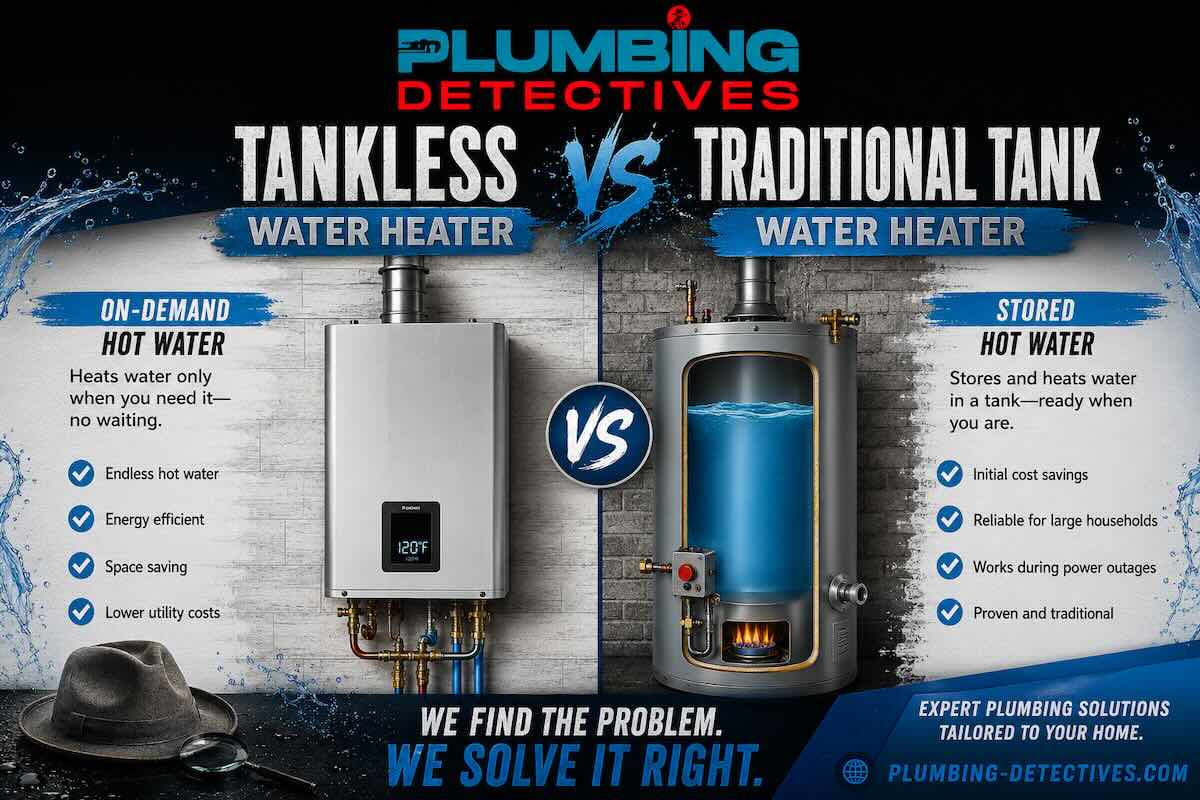
A traditional tank water heater stores and continuously heats 30-80 gallons of water, so hot water is always ready to go, but it’s also always using energy to keep that tank hot, even overnight when no one’s home.
A tankless water heater heats water on demand as it flows through the unit, rather than storing it. There’s no tank to run out, but the flow rate is limited by the size of the unit, which matters if multiple showers or appliances run hot water at once.
Long-Term Energy Costs
Tankless units are generally more energy-efficient over time since they’re not heating water you’re not using. For a household using a moderate amount of hot water, the energy savings can help offset the higher upfront cost over several years. Larger households with high hot water demand see a smaller efficiency gap, since the tankless unit is working closer to capacity more of the time.
Space and Lifespan
Tank water heaters take up a fair amount of floor space, usually in a garage or utility closet. Tankless units mount to the wall and take up a fraction of the space, which can matter in smaller Florida homes or condos with limited utility space.
Tankless units also tend to last longer, often 20 years compared to 10-15 years for a tank system, though this depends heavily on water quality and maintenance.
A Note on Florida’s Water
Pinellas County’s water is on the harder side, and hard water minerals build up inside water heaters over time. This affects both types, but tankless units are more sensitive to it, since mineral scale can restrict the narrow heating passages faster than it affects a large tank. If you go tankless, a whole-home water softener or regular descaling maintenance will meaningfully extend the unit’s life.
Which One Fits Your Household?
Choose tank if: You want the lower upfront cost, have a larger household with high simultaneous hot water demand, or aren’t planning to invest in updated gas/electric lines.
Choose tankless if: You want long-term energy savings, have limited installation space, plan to stay in the home long enough to recoup the higher upfront cost, and are willing to keep up with descaling maintenance.
Either Way, Installation Matters
Both types of water heaters are safe and reliable when installed correctly and by a licensed plumber. Improper installation, undersized gas lines, or missing expansion tanks are where most water heater problems start.
Not sure which is right for your home? Contact Plumbing Detectives for a free estimate. We serve homeowners across St. Petersburg, Clearwater, Largo, Dunedin, Tarpon Springs, Safety Harbor, Seminole, and all of Pinellas County. Contact Plumbing Detectives today at 727-495-9065. We’ll walk through your household’s hot water needs, check your existing lines, and help you choose (and install) the water heater that makes sense for your home and budget.