Hard Water in Pinellas County: What It’s Doing to Your Pipes (And How to Stop It)
If you’ve noticed a crusty white buildup around your faucets, spots on your dishes straight out of the dishwasher, or soap that just won’t seem to lather right — you’re not imagining things. Pinellas County has hard water, and it’s affecting homes across the area every single day.
The good news? It’s a very solvable problem. But first, let’s break down what’s actually going on.
What Is Hard Water, Anyway?
Water becomes “hard” when it picks up high concentrations of dissolved minerals — mainly calcium and magnesium — as it moves through rock and soil before reaching your tap. The harder the water, the more minerals it’s carrying.
Water hardness is measured in grains per gallon (GPG). Here’s a quick reference:
0–1 GPG — Soft
1–7 GPG — Moderately hard
7–10 GPG — Hard
10+ GPG — Very hard
Pinellas County’s water typically falls in the hard to very hard range, largely because our water supply draws from the Florida Aquifer — a limestone-rich underground water source. Limestone is loaded with calcium carbonate, and by the time that water reaches your home, it’s carrying a significant mineral load.
What Hard Water Is Actually Doing to Your Home
This is where it gets important — especially for homeowners and property managers who want to protect their investment.
🔧 Your Pipes
Over time, mineral deposits from hard water build up on the inside walls of your pipes. This buildup — called scale — gradually narrows the diameter of your pipes, which means:
Reduced water pressure throughout your home
Increased strain on your plumbing system
A higher likelihood of clogs and blockages
Pipes that wear out and need replacement years sooner than they should
In older Pinellas County homes especially, hard water scale can be a silent killer for aging pipe systems.
🍽️ Your Appliances
Your water heater, dishwasher, washing machine, and refrigerator ice maker all run water through them constantly. Scale buildup inside these appliances forces them to work harder, which means:
- Higher energy bills (a scaled-up water heater can use up to 30% more energy)
- Shorter appliance lifespan — you may be replacing your water heater years early
- Poor performance — cloudy glasses, stiff laundry, lukewarm showers
🚿 Your Fixtures and Surfaces
That white, chalky residue around your showerhead, faucets, and sink drains? That’s calcium scale — and while it looks like just a cosmetic issue, it can permanently damage fixture finishes and reduce flow over time.
🧼 Your Skin and Hair
Hard water doesn’t just affect your plumbing — it affects you. The minerals in hard water can leave a residue on skin and hair, contributing to dryness, irritation, and that squeaky-but-not-actually-clean feeling after a shower.
The Pinellas County Factor
It’s worth pointing out that this isn’t just a generic hard water problem — our local water has specific characteristics worth knowing about.
Pinellas County water is treated and distributed by Pinellas County Utilities and sourced primarily from the Tampa Bay Water regional system, which draws from groundwater, surface water, and a desalination plant. While the treatment process removes contaminants, it doesn’t remove hardness minerals — those come along for the ride regardless.
Depending on which part of the county you’re in — whether that’s St. Petersburg, Clearwater, Largo, Dunedin, or Tarpon Springs — your water hardness levels can vary slightly, but the whole county deals with it to some degree.
How to Protect Your Home from Hard Water Damage
Here’s the part you’ve been waiting for. The great news is there are proven, effective solutions — and the right choice depends on your home’s size, your budget, and how much protection you want.
✅ Option 1: Whole-Home Water Softener
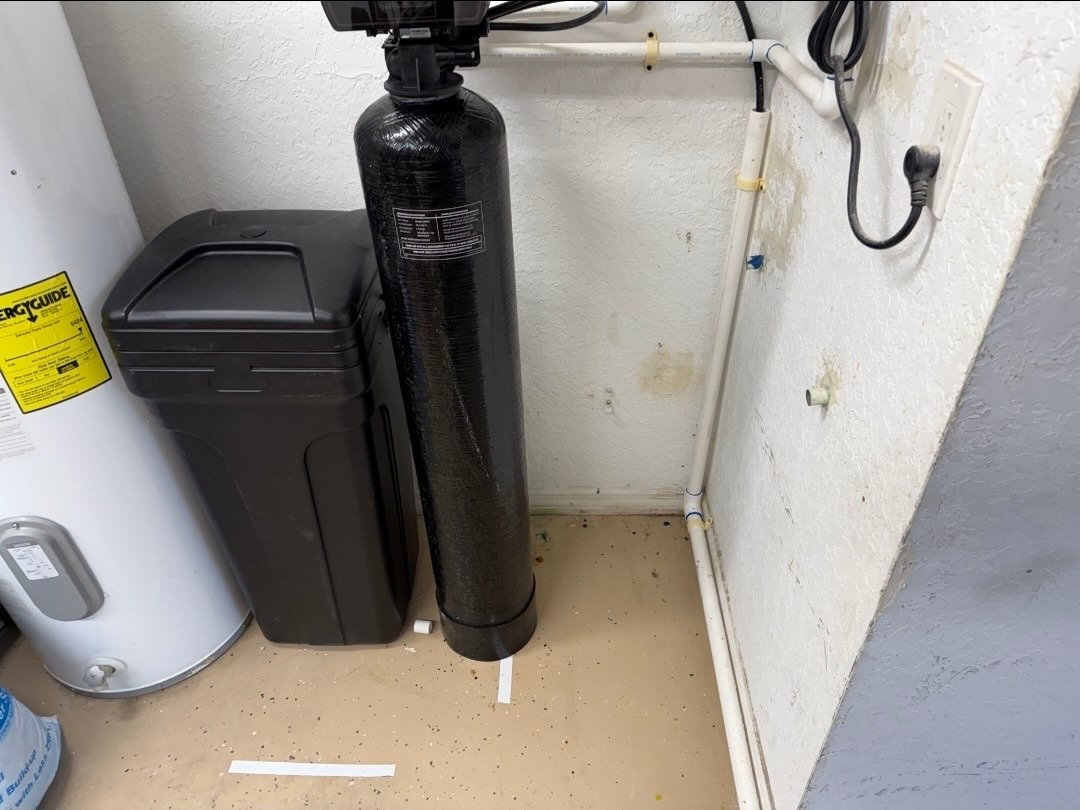
This is the gold standard for hard water treatment. A whole-home water softener is installed where your main water line enters the house and treats all the water in your home before it ever reaches a pipe, faucet, or appliance.
Water softeners work through a process called ion exchange — swapping out calcium and magnesium ions for sodium ions, which don’t cause scale buildup.
Benefits:
- Protects your entire plumbing system and all appliances
- Noticeably softer skin and hair
- Cleaner dishes, brighter laundry
- Extends the life of your water heater and other appliances significantly
Best for: Homeowners who want comprehensive, whole-house protection
✅ Option 2: Salt-Free Water Conditioner
A salt-free conditioner doesn’t actually remove minerals from the water — instead, it changes their structure so they can’t stick to pipe walls or surfaces. It’s sometimes called a “water descaler” or “template-assisted crystallization (TAC) system.”
Benefits:
- No salt or chemicals needed
- Low maintenance
- Eco-friendly — no wastewater discharge
- Good at preventing new scale buildup
Best for: Homeowners who want a lower-maintenance solution or have dietary sodium concerns
✅ Option 3: Under-Sink Reverse Osmosis Filter
An RO system is installed under your kitchen sink and provides ultra-purified drinking water by pushing water through a fine membrane that removes virtually everything — including hardness minerals. This doesn’t protect your pipes or appliances, but it’s a great complement to a softener for pristine drinking water.
Best for: Homeowners who want the best-tasting, cleanest drinking water possible
✅ Option 4: Descaling and Maintenance
Already dealing with existing scale buildup? A licensed plumber can perform descaling treatments on your pipes and water heater to remove existing mineral buildup and restore flow and efficiency. Think of it as a reset button before you install a longer-term solution.
Signs You Should Call a Plumber About Your Hard Water
Not sure if hard water has already started causing problems in your home? Watch out for these warning signs:
- Noticeably low water pressure throughout the house
- White or yellowish buildup around fixtures that keeps coming back
- Water heater making popping or rumbling sounds (that’s scale on the heating element)
- Appliances failing earlier than expected
- Pipes that seem to clog more frequently than they should
If any of these sound familiar, it’s worth having a professional take a look before the problem gets more expensive to fix.
Plumbing Detectives Is Your Local Hard Water Expert
At Plumbing Detectives, we’ve seen firsthand what years of hard Pinellas County water can do to a home’s plumbing system. We help homeowners and property managers across St. Petersburg, Clearwater, Largo, Dunedin, Tarpon Springs, and the surrounding area find the right solution for their home — and their budget.
Whether you need a whole-home water softener installed, a descaling service, or just a second opinion on what your water is doing to your pipes, our team is here to help you figure it out.
Contact Plumbing Detectives today for a water quality consultation — because your pipes deserve better than a mineral buildup slowly stealing years off their life. Call or text 727-495-9065.