The Pinellas County Homeowner’s Guide to Bathroom & Kitchen Plumbing Remodels
There’s nothing quite like a freshly remodeled kitchen or bathroom. New fixtures, updated finishes, a space that finally works the way you want it to. For a lot of Pinellas County homeowners, a remodel is one of the best investments they can make — both in their quality of life and in their home’s resale value.
But here’s what the glossy renovation shows don’t spend much time on: the plumbing. It’s not the most glamorous part of a remodel, but it’s the part that determines whether your beautiful new kitchen or bathroom actually functions the way it should — for years to come. Get it right, and you’ll never think about it again. Get it wrong, and you’ll be thinking about it constantly.
At Plumbing Detectives, we’ve been involved in hundreds of remodels across Pinellas County. We’ve seen what works, what doesn’t, and what mistakes cost homeowners the most money. This guide is everything we wish every homeowner knew before starting a remodel.
First Things First: Why Plumbing Is the Foundation of Any Remodel
When most people plan a kitchen or bathroom remodel, they start with the fun stuff — cabinet styles, countertop materials, tile patterns, fixture finishes. And that makes sense. Those are the things you’ll see and touch every day.
But here’s the reality: all of those beautiful finishes sit on top of a plumbing system. Your new farmhouse sink is only as good as the supply lines feeding it and the drain carrying water away from it. Your rainfall showerhead is only as satisfying as the water pressure behind it. Your double-sink vanity only works if the drain configuration is done correctly.
Plumbing decisions made early in the planning process determine what’s possible with your design. Plumbing problems that surface after tile is laid and cabinets are installed are exponentially more expensive to fix. That’s why the smartest remodels bring a licensed plumber into the conversation at the very beginning — not as an afterthought.
Planning Your Remodel: What to Expect from the Plumbing Side
The Difference Between a Cosmetic Refresh and a Full Remodel
Not every remodel involves moving plumbing, and it’s worth understanding the difference upfront because it significantly affects your budget and timeline.
A cosmetic refresh swaps out fixtures, faucets, and visible hardware without moving any pipes. You’re replacing your old faucet with a new one in the same location. You’re installing a new toilet in the same spot. You’re putting in a new showerhead on the existing arm. This type of work is relatively straightforward, lower cost, and faster to complete.
A full remodel involves changing the layout — moving the sink to a different wall, adding a second sink, relocating the toilet, converting a tub to a walk-in shower, adding a kitchen island with a prep sink, or reconfiguring the entire space. This requires moving supply lines and drain lines, which means opening walls and floors, and in Florida slab homes, potentially working through or around your concrete foundation.
Knowing which category your project falls into helps set realistic expectations for cost, timeline, and what trades need to be involved.
What a Plumber Does During a Remodel
A lot of homeowners assume the general contractor handles everything and the plumber just shows up at the end to connect a few fixtures. In reality, a licensed plumber is involved at multiple stages:
Rough-in work comes first — before any walls are closed or tile is laid. This is when supply lines and drain lines are moved, extended, or added to match the new layout. Getting this stage right is critical because mistakes here get buried behind finished surfaces.
Inspections happen after rough-in work in permitted projects. In Pinellas County, plumbing work that moves or adds pipes requires a permit and inspection. We’ll talk more about this shortly.
Trim-out happens near the end of the project, when the plumber returns to install and connect the actual fixtures — faucets, toilets, showers, tub fillers, garbage disposals, dishwashers, and so on.
Having the same plumber handle both rough-in and trim-out is ideal — they know exactly what was done behind the walls and can troubleshoot any issues quickly.
The ROI Case: What Plumbing Upgrades Are Actually Worth It
Let’s talk money — because a remodel is a significant investment and it’s worth understanding which plumbing upgrades deliver real returns, both in daily quality of life and in resale value.
Bathroom Remodel ROI
According to national remodeling data, a midrange bathroom remodel returns roughly 60–70% of its cost at resale — and in a hot Florida market like Pinellas County, that number can be higher. But not all upgrades are created equal.
High-ROI bathroom plumbing upgrades:
Walk-in shower conversion — Converting a rarely-used tub to a walk-in shower is one of the most consistently popular upgrades among buyers. A well-done tile shower with quality fixtures reads as a luxury upgrade and adds real perceived value. From a plumbing standpoint it requires new drain configuration and supply line adjustments, but it’s a well-defined scope of work.
Double vanity addition — Adding a second sink to a shared bathroom is one of the most quality-of-life improvements a couple or family can make. It requires extending supply lines and adding a second drain, but the daily convenience — and the appeal to buyers — makes it a smart investment.
Toilet upgrade — Modern toilets are dramatically more water-efficient than models from 20+ years ago. In Florida, where water costs and conservation matter, upgrading to a WaterSense-certified toilet saves money monthly and is a selling point at resale.
Shower system upgrade — A thermostatic shower valve with body sprays or a rainfall head is a genuine luxury upgrade that buyers notice. The plumbing behind it is more complex than a standard shower, but in a primary bathroom it adds significant perceived value.
Lower-ROI but worth considering:
Jetted tub installation — Jetted tubs are expensive to install and have fallen somewhat out of fashion with buyers who prioritize showers. If you love a jetted tub and plan to stay in your home long-term, go for it. But if resale value is your primary motivation, a walk-in shower will serve you better.
Kitchen Remodel ROI
A major kitchen remodel returns roughly 55–65% at resale nationally, with minor to midrange kitchen remodels often returning more proportionally. The kitchen is consistently one of the top three factors buyers consider, and updated plumbing is a meaningful part of that.
High-ROI kitchen plumbing upgrades:
Garbage disposal installation or upgrade — One of the most cost-effective kitchen upgrades available. If your home doesn’t have one, adding a garbage disposal is relatively inexpensive and is expected by most buyers. Upgrading to a quieter, more powerful model is a small cost with a noticeable daily benefit.
Kitchen faucet upgrade — A high-quality pull-down or pull-out faucet with a solid finish (brushed nickel, matte black, or unlacquered brass are all popular right now) makes a kitchen feel noticeably more modern. The fixture cost varies widely, but installation is straightforward.
Prep sink addition — If you’re adding or reconfiguring a kitchen island, adding a prep sink is a highly functional upgrade that buyers appreciate. It does require running new supply and drain lines to the island, which adds to the plumbing scope — but the result is a genuinely more functional kitchen.
Dishwasher supply and drain upgrade — If you’re replacing an older dishwasher during a remodel, it’s worth having a plumber inspect and update the supply line and drain connection at the same time. Older connections can be undersized or worn, and a remodel is the ideal time to address this while things are already open.
Water filtration at the sink — Under-sink reverse osmosis systems or inline filters with dedicated faucets are increasingly popular — especially in Pinellas County where water quality is a known concern. Installation during a remodel is seamless since the plumber is already working under the sink.
The Mistakes That Cost Homeowners the Most Money
This is the section we really want every homeowner to read before starting a remodel. These are the mistakes we see most often — and the ones that turn a smooth renovation into a stressful, expensive mess.
Mistake #1: Skipping the Permit
This is the big one. In Pinellas County, any plumbing work that involves moving, adding, or modifying pipes requires a permit. We know permits feel like an extra step — more time, a little more cost, some paperwork. But skipping them creates serious problems:
- Insurance won’t cover unpermitted work. If a leak develops from unpermitted plumbing and causes damage, your homeowner’s insurance has grounds to deny the claim.
- It creates problems at resale. When you sell your home, unpermitted work gets flagged during inspection and can blow up a deal or require expensive remediation before closing.
- It can mean tearing out finished work. If unpermitted plumbing is discovered, the county can require you to open walls and redo the work — after your tile is already laid.
A licensed plumber pulls the permits. That’s part of what you’re paying for, and it protects you.
Mistake #2: Choosing Fixtures Before Confirming Plumbing Compatibility
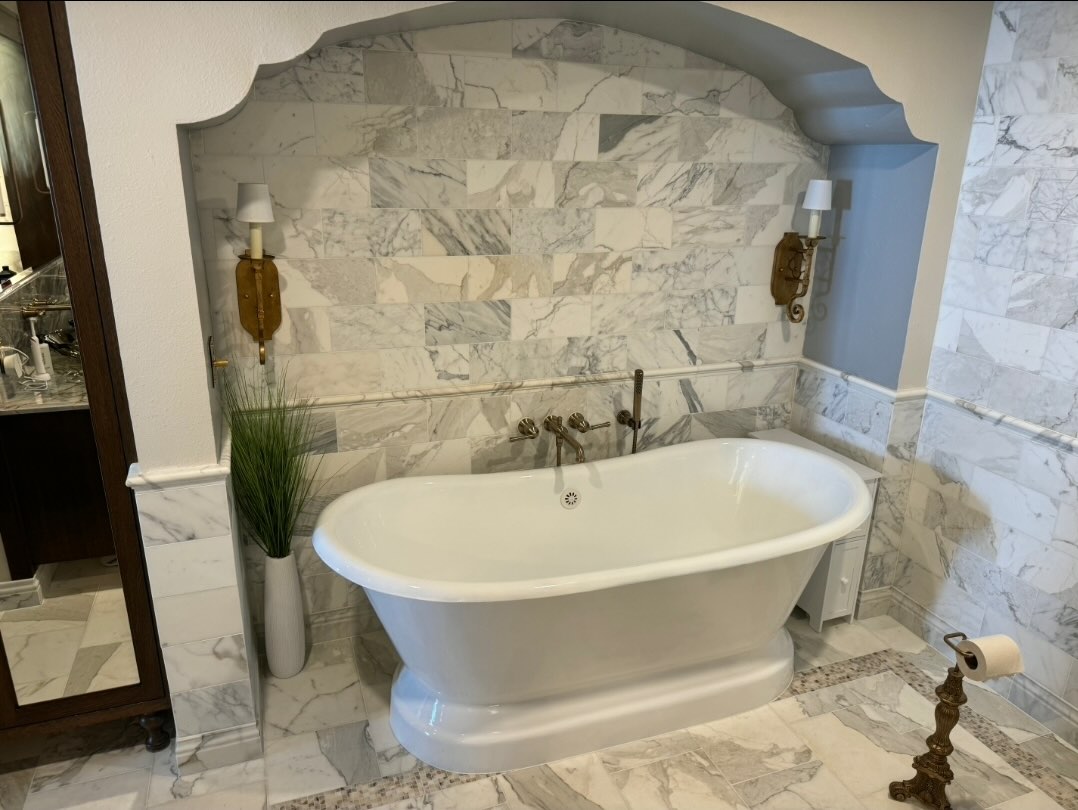
This happens constantly. A homeowner falls in love with a gorgeous freestanding tub or a wall-mounted faucet, orders it, and then discovers the plumbing rough-in doesn’t support it — or that making it work requires significant additional work that wasn’t in the budget.
Always run fixture choices by your plumber before purchasing. A quick conversation can save you from a costly return or an unexpected change order.
Mistake #3: Ignoring What’s Behind the Walls
A remodel is a rare opportunity to see inside your walls and address issues that are otherwise invisible. In older Pinellas County homes especially, opening walls during a remodel sometimes reveals corroded pipes, outdated galvanized steel lines, improper previous repairs, or early signs of water damage.
The temptation is to close everything back up and pretend you didn’t see it. Don’t. Addressing these issues while the walls are already open costs a fraction of what it costs to open them back up later.
Mistake #4: Hiring an Unlicensed Plumber to Save Money
Florida requires plumbers to be licensed for good reason. Unlicensed plumbing work may be cheaper upfront, but the risks are significant — improper installations, code violations, no permit protection, and no recourse if something goes wrong. Always verify your plumber’s license through the Florida Department of Business and Professional Regulation (DBPR) before work begins.
Mistake #5: Not Accounting for Florida-Specific Challenges
Pinellas County remodels come with some unique considerations that homeowners in other parts of the country don’t face:
- Slab construction means moving drains requires cutting through concrete — a more involved process than in homes with crawl spaces. This needs to be factored into both the budget and the timeline.
- Hard water means new fixtures will be exposed to mineral-rich water from day one. Discussing a water softener or filtration system during the remodel planning stage is smart — it’s much easier to install before everything is finished.
- Humidity and mold risk means any moisture intrusion during the remodel — even minor — needs to be fully dried and addressed before walls are closed. Florida’s climate is unforgiving when it comes to trapped moisture.
Mistake #6: Underestimating the Timeline
Plumbing rough-in work needs to be inspected and approved before walls can be closed and tiling can begin. If the inspection reveals corrections are needed, that adds time. Building this into the project schedule from the start — rather than treating inspections as a formality — leads to much less frustration.
How to Work With a Plumber on Your Remodel: A Simple Roadmap
If you’re planning a kitchen or bathroom remodel in Pinellas County, here’s the process that leads to the best outcomes:
1. Call your plumber before you finalize your design. Share your ideas early. A quick conversation can identify what’s easily achievable, what requires additional work, and what might need a design adjustment. This is free information that can save you real money.
2. Get a detailed written scope of work. Before any work begins, make sure you have a written description of exactly what plumbing work is included — rough-in, trim-out, permits, fixture installation, and anything else relevant. This protects both parties and prevents scope creep surprises.
3. Coordinate with your general contractor. Your plumber and GC need to be communicating about sequencing — who does what, when. Rough-in happens before tile. Trim-out happens after. Inspections happen at specific milestones. A plumber who has worked on remodels regularly will know how to coordinate this smoothly.
4. Do a final walkthrough before walls close. Before drywall goes back up, walk through the space with your plumber and confirm everything is exactly where it needs to be. This is your last easy opportunity to make adjustments.
5. Keep your documentation. Save your permit records, inspection reports, and any warranties on fixtures or materials. These are valuable at resale and helpful if any issues arise down the road.
Ready to Start Planning Your Remodel?
A kitchen or bathroom remodel is one of the most rewarding home improvement projects you can undertake — and when the plumbing is done right, you truly never have to think about it again. The space just works, beautifully and reliably, for years to come.
At Plumbing Detectives, we love being part of remodel projects. There’s something genuinely satisfying about helping a homeowner create a space they’re proud of — and knowing the plumbing behind it is solid, permitted, and built to last.
We serve homeowners across St. Petersburg, Clearwater, Largo, Dunedin, Tarpon Springs, Safety Harbor, Seminole, and all of Pinellas County. Whether you’re in the early planning stages or ready to get started, we’re happy to walk through your project and give you an honest assessment of what’s involved.
Contact Plumbing Detectives today at 727-495-9065 — let’s build something great together.